As strategists, we’re paid to see around corners.
That means spending less time chasing every new platform, algorithm update or AI headline and more time understanding the deeper shifts changing how people discover, evaluate, trust and choose brands.
Whether we’re helping a healthcare organization build trust with patients, supporting a family-focused brand as it earns relevance with parents or guiding a B2B company through a complex buying journey, the same forces keep showing up. Different audiences. Different categories. The same underlying changes.
These aren’t passing trends. They’re structural shifts that are reshaping how modern marketing works.
Here’s the five shifts currently in our strategic toolbox: brand is back, connectioneering, creative maximalism, creating for the feed and AI as the audience.
1. Brand is back
For years, marketing became obsessed with measurability.
Performance marketing delivered immediate results, and many organizations began treating brand-building as something you invest in after the numbers work. That environment is changing.
AI-powered search is reducing clicks. Recommendation engines increasingly shape discovery before people actively search. Optimization has also pushed many brands toward the same predictable middle ground.
In this environment, recognition becomes a competitive advantage. Brands that are growing aren’t just easy to find, they’re easy to remember.
Marketers must stop treating brand as top-of-funnel decoration and start building it as an always-on system again: distinctive memory cues, modular creative across platforms, and aligned brand and performance.
Nike’s “So Win” is a good reference point. Two words, endlessly repeatable, ambiguous enough to argue about, and simple enough that fans caption their own content with it. The campaign didn’t just run. People kept it running.
2. Connectioneering
Connectioneering is the practice of engineering content to make people feel something, not just buy something.
Audiences have never been better at ignoring ads. What they can’t ignore is work that meets an underlying need, aligns with how they see themselves and resonates before it rationalizes.
The practical shift is that connection isn’t a moment anymore. It’s built across systems, shaped partly by what algorithms choose to amplify, and earned over time. Google’s “Loretta” spot remains an aspirational benchmark for us. Yes, it’s technically a product demo, but viewers remember it for how it made them feel. That’s the standard worth chasing, because feeling is what builds loyalty, lifetime value and the kind of customers who advocate for you unprompted.
3. Creative maximalism
Minimalism was supposed to cut through the clutter. Somewhere along the way it became the clutter. When every feed is full of tasteful white space and quiet sans-serifs, the restraint blends in. Now, the loud palettes, dense layered compositions, kinetic motion, type with personality, humor and chaos of maximalism are the smarter bet to stand out.
There’s a reason it works. Pattern interruption breaks scroll autopilot. Novelty and complexity hold attention longer. Layered work rewards people for sticking around. Think Gucci’s “Aria,” Burger King’s Moldy Whopper, Spotify Wrapped. It’s all work designed to overwhelm (in the best way).
The honest caveat: Maximalism without strategy is just noise. If the message gets lost or the chaos feels forced, you’ve interrupted someone for nothing. We treat it as a tool with a sharp edge. Used deliberately, it captivates. Used as a costume, it backfires.
4. Creating for the feed
Algorithms increasingly determine what gets discovered, recommended and consumed. Whether it’s TikTok, Meta, Google, LinkedIn, Amazon or emerging AI search experiences, marketers are no longer communicating directly with audiences. They’re communicating through systems that influence visibility.
The implication is profound. Creative now has two audiences:
- The human who ultimately makes the decision
- The machine that determines whether the message gets seen in the first place
That’s changing how we think about content architecture, storytelling, media planning and creative development.
In practice, the first three seconds are no longer setup. They’re the strategy. TikTok’s own guidance recommends putting the proposition in the first three seconds and the hook within six seconds. The brands winning on the social media platform build the hook into the idea rather than bolting branding on at the end. Duolingo opens with TikTok-native language. Nutter Butter built an entire lo-fi universe that behaves like the feed instead of interrupting it.
Our working method: build one idea as a system. A hero concept, eight to ten opening hooks, a few ending payoffs and two or three ownable interruption devices that stay constant while everything else gets tested. And to be clear, lo-fi doesn’t mean low craft. The craft just moves toward relevance, speed and cultural fluency instead of polish for its own sake.
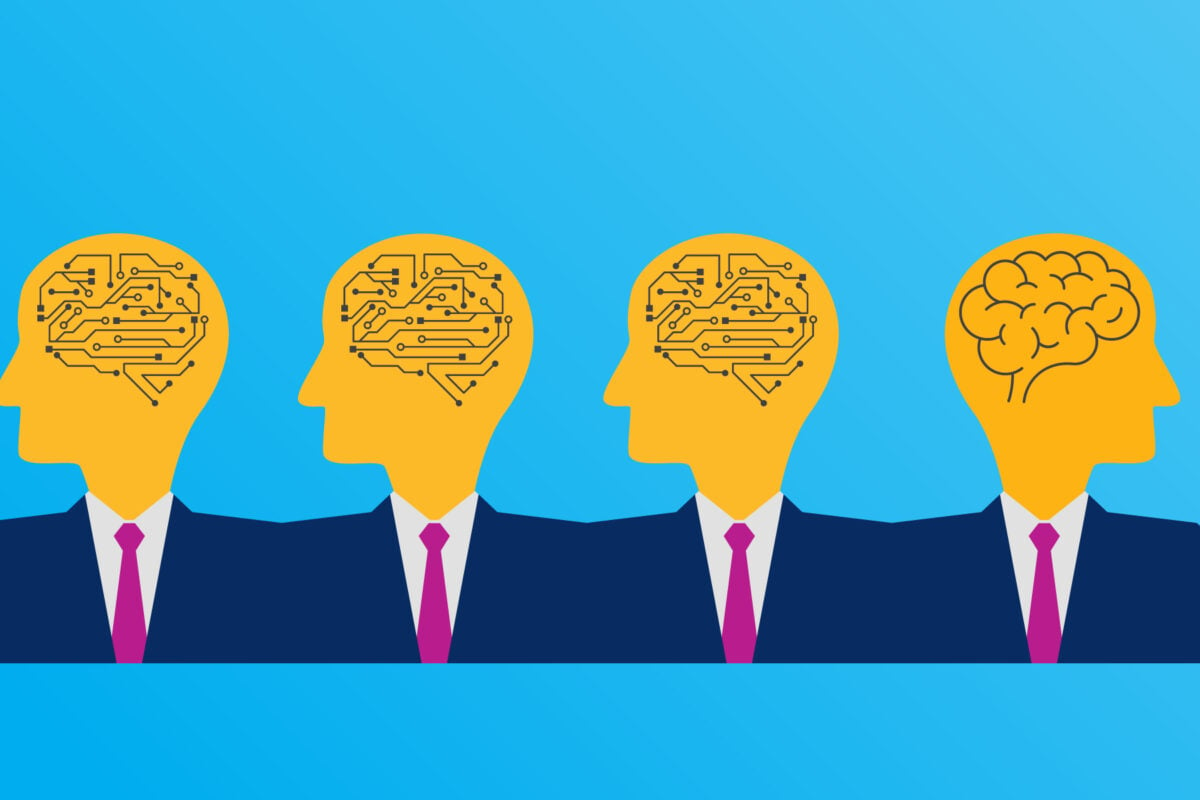
5. AI becomes the audience
The newest tool in the box is also the strangest. Synthetic audiences, meaning AI-generated personas trained on large datasets, can now simulate how people might respond to a concept before it ever ships. Nestlé has built digital twins of consumers to pressure-test product concepts, messaging and packaging. The appeal is obvious: faster testing, pre-optimized creative, less risk on the media spend.
Usable, sure, but we would not trust it alone. Synthetic isn’t human, and models miss the things that make work great: culture, tension, emotion, the idea that provokes instead of merely performing. Worse, optimizing against predicted outcomes pulls everything toward sameness, which is exactly the issue the other four trends are trying to solve.
So our rule is simple. AI informs, it shouldn’t decide. Synthetic insight gets balanced against human truth; we optimize for distinctiveness rather than just predicted performance; and the feedback loops that matter come from the real world, not the simulation.
What ties these five trends together?
Look at the five trends together and a pattern shows up. Machines now sit between brands and people, deciding what gets seen. The way through isn’t gaming the machine. It’s being so recognizable, so emotionally resonant and so culturally fluent that both the algorithm and the human want more. Our toolbox will keep changing, but the goals remain the same. Build brands people remember. Create experiences people feel. Earn trust before you ask for action. Everything else is just a tactic.